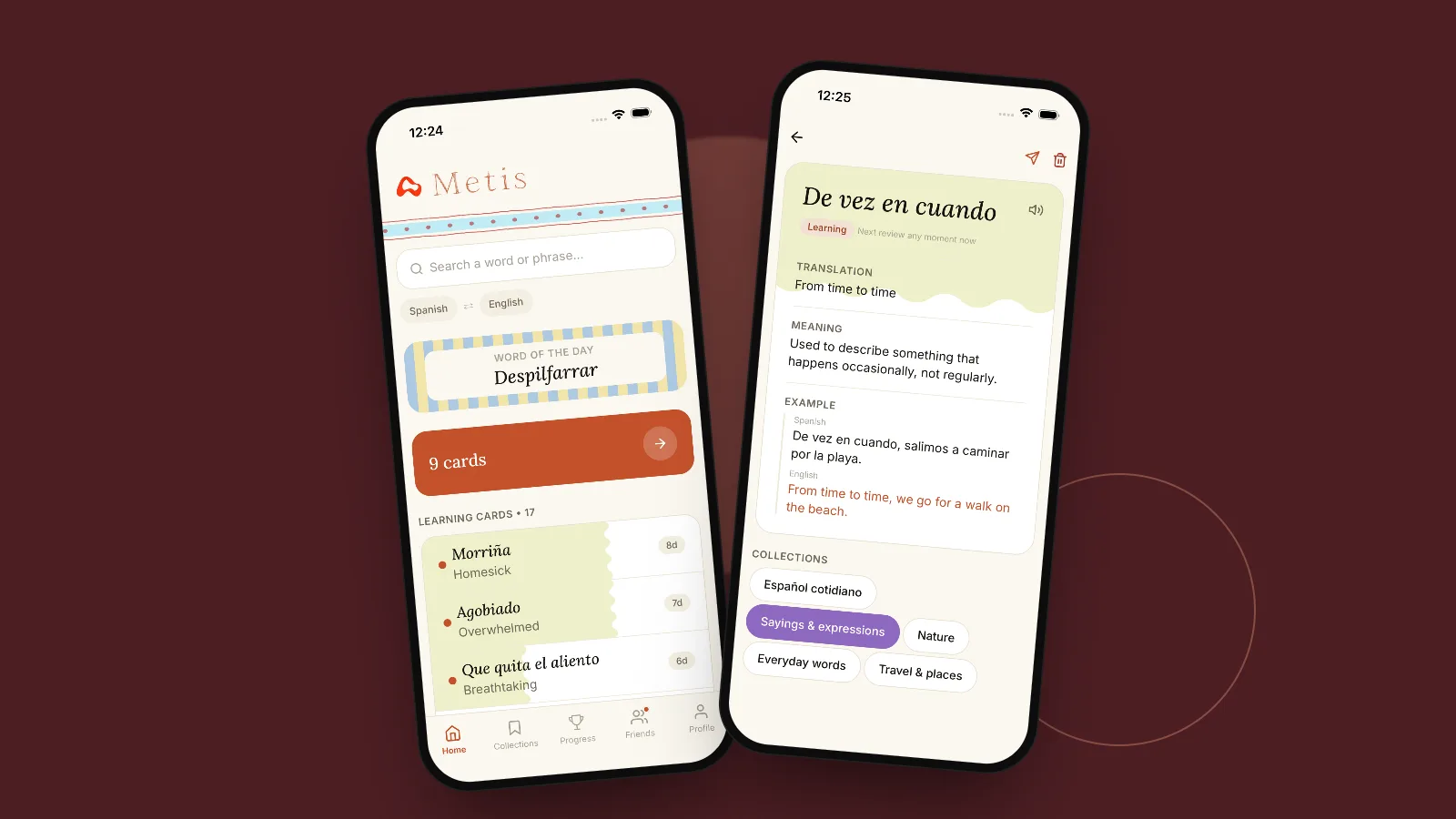
In short
- Use Google Translate for long texts, signs, menus and anything you only need once.
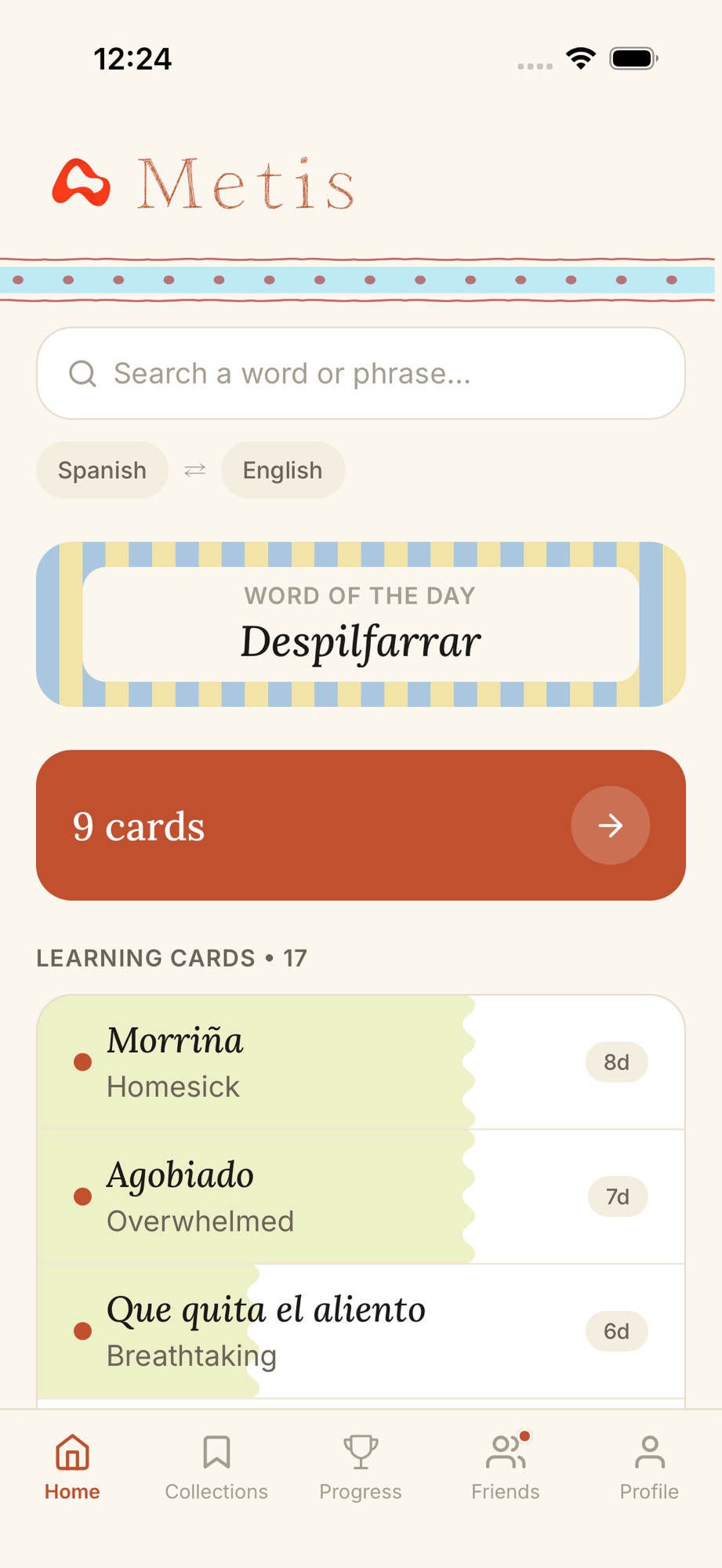
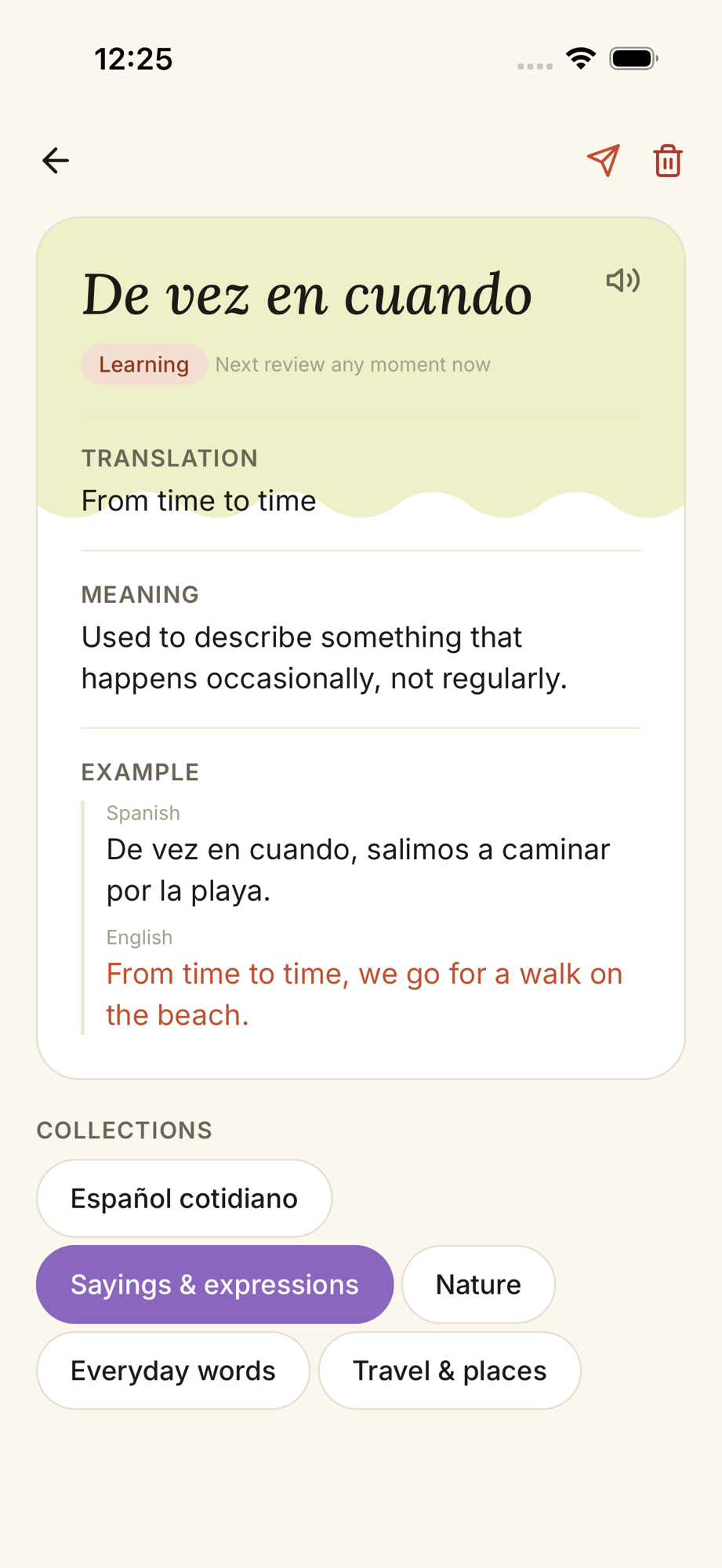
- Use Metis for the words you want to keep: it adds a meaning, an example and spaced reviews.
- The difference isn't the translation, it's what happens after it.
In this guide
The search history problem
If you live abroad or use another language every day, have a look at your translator's history: chances are it's the same few words, looked up again and again. Translation apps are designed to answer a question as fast as possible and get out of your way. That's exactly right when you need to read a letter from your landlord, and exactly why the words don't stay.
Side by side
- Translates long texts, websites, photos
- Google TranslateYes
- MetisNo, words and short expressions
- Meaning explained in plain words
- Google TranslateSometimes, for single words
- MetisYes, every time
- Real example sentence
- Google TranslateSometimes
- MetisYes, with its translation
- Synonyms
- Google TranslateSometimes
- MetisYes
- Saves the word for later
- Google TranslateA phrasebook list
- MetisA card, in one tap
- Brings the word back to review
- Google TranslateNo
- MetisAfter 1, 2, 4 and 7 days
- Quizzes
- Google TranslateNo
- Metis4 styles, from multiple choice to typing it
- Price
- Google TranslateFree
- MetisFree on iPhone, optional premium
When Google Translate is the right tool
- Reading or writing a full message, email or document.
- Signs, menus and labels, especially with the camera.
- A word you'll probably never need again.
- Conversations, with its voice mode.
When Metis is the right tool
- A word you've looked up before and keep forgetting.
- Expressions you hear around you, like "en avoir marre" or "kiffer", that textbooks don't cover.
- Words for your work, your flat, your daily life.
- Any word you'd be embarrassed to look up a third time.
Using both
You don't have to choose. Keep Google Translate for the big jobs, and when a single word or expression catches your attention, look it up in Metis instead. You type it in either language, like in a translator, and you get the translation, a plain-language meaning, an example and synonyms. If it's worth keeping, one tap turns it into a card, and Metis brings it back as a short quiz until you know it.
A simple rule
If you'd like to know the word next month too, look it up in Metis. If you only need it right now, use a translator.
Questions people ask
Is Metis a translator?
For single words and short expressions, yes: you type in either language and get the translation, meaning, example and synonyms. For long texts and documents, a translator like Google Translate is the better tool.
Can't I just use Google Translate's phrasebook?
You can save translations there, but it's a list: nothing brings the words back or asks you for them, so it works like a notes app.
Is Metis free?
Yes, Metis is free on iPhone. Free accounts learn one language with up to 10 words in progress at a time; learned words don't count. Premium removes the limits and adds widgets.